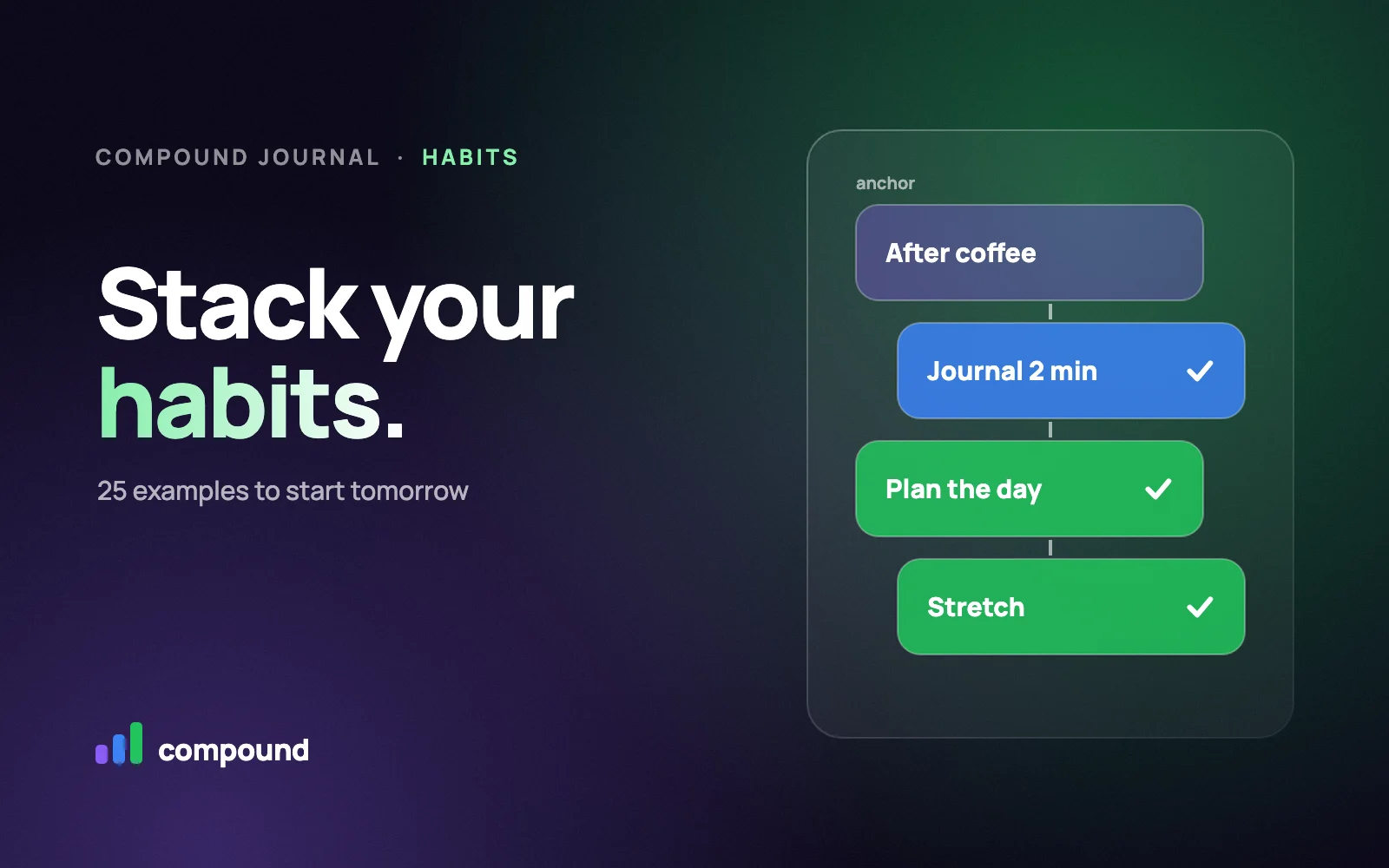
Habit stacking is the simplest way to add a new habit to your day: attach it to something you already do without thinking. The formula, popularised by James Clear in Atomic Habits, is one sentence: “After I [current habit], I will [new habit].” Your existing routine becomes the reminder. Below is how to build a good stack, followed by 25 examples you can copy tomorrow morning.
Why stacking works
New habits usually fail at the “remembering” stage, not the “doing” stage. You meant to stretch, you just didn’t think of it. Your current routines, like making coffee, brushing your teeth or sitting down at your desk, already happen every day at roughly the same time. Linking a new behaviour to one of them gives it a reliable trigger.
Rules for a stack that sticks
- Be specific. “After I pour my first coffee” beats “in the morning”.
- Match location and time. Stack a habit onto something that happens where the new habit can be done.
- Keep the new habit tiny. Two minutes or less to start. Grow it later.
- One new habit per anchor. Long chains break at the weakest link.
Morning stacks
- After I turn off my alarm, I will drink a glass of water.
- After I drink my water, I will open the curtains and get daylight for two minutes.
- After I pour my coffee, I will write the three most important tasks for today.
- After I brush my teeth, I will do ten squats.
- After I get dressed, I will take my vitamins.
- After I sit on the train, I will read ten pages instead of opening social media.
Work stacks
- After I sit down at my desk, I will close every tab I don’t need.
- After I open my laptop, I will work 25 minutes on my top task before checking email.
- After every meeting, I will write the next action in my task list.
- After I eat lunch, I will walk for ten minutes.
- After I finish my last task, I will plan tomorrow.
- After I close my laptop, I will tidy my desk for two minutes.
Health stacks
- After I put on my running shoes, I will step outside, even for five minutes.
- After I finish a workout, I will stretch for five minutes.
- After I fill my water bottle, I will drink half of it.
- After dinner, I will put my phone on the charger outside the bedroom.
- After I get into bed, I will read instead of scrolling.
Money and learning stacks
- After I get paid, I will move a fixed amount to savings.
- After I buy something, I will log the expense.
- After my Sunday coffee, I will review my budget for the week.
- After I make tea in the evening, I will practise a language for ten minutes.
- After I finish a book chapter, I will write one sentence about it.
Relationship and reflection stacks
- After I sit down to dinner, I will ask one real question about someone’s day.
- After I lock the door at night, I will log my mood and motivation from 1 to 10.
- After I log my mood, I will write one thing that went well today.
Pick one stack, not five. When it runs on autopilot for a few weeks, add the next.
Track the new habit, not the anchor
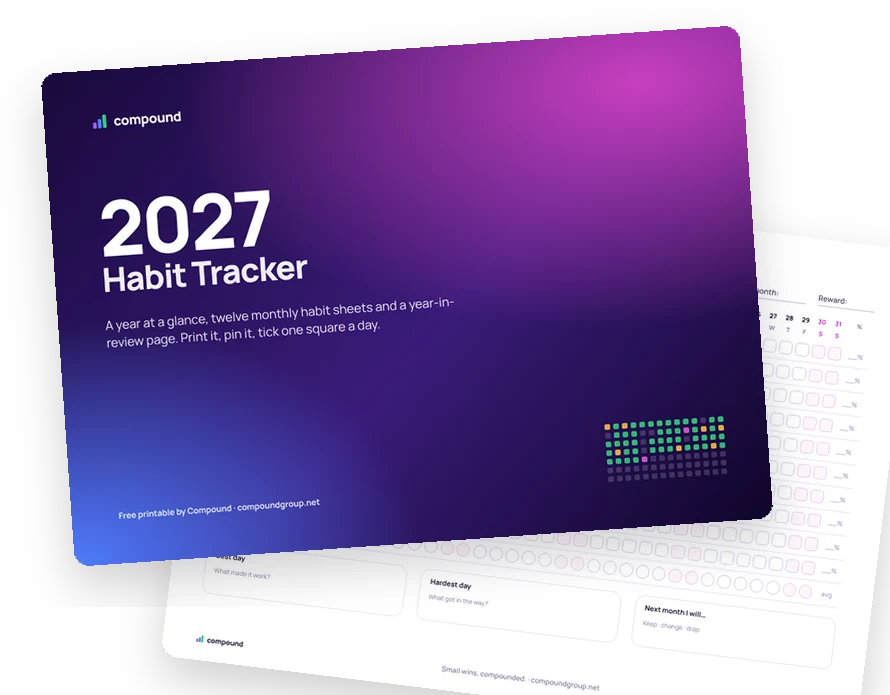
You don’t need to track the coffee. Track the habit you added after it. A monthly grid will show you quickly whether the stack works: if the new habit gets ticked on most days, the anchor is reliable. If it doesn’t, try a different anchor rather than more willpower.
In Compound you can add as many habits as you like, give each one an emoji and see its completion in percent for the month, so a weak stack shows up within a week or two.