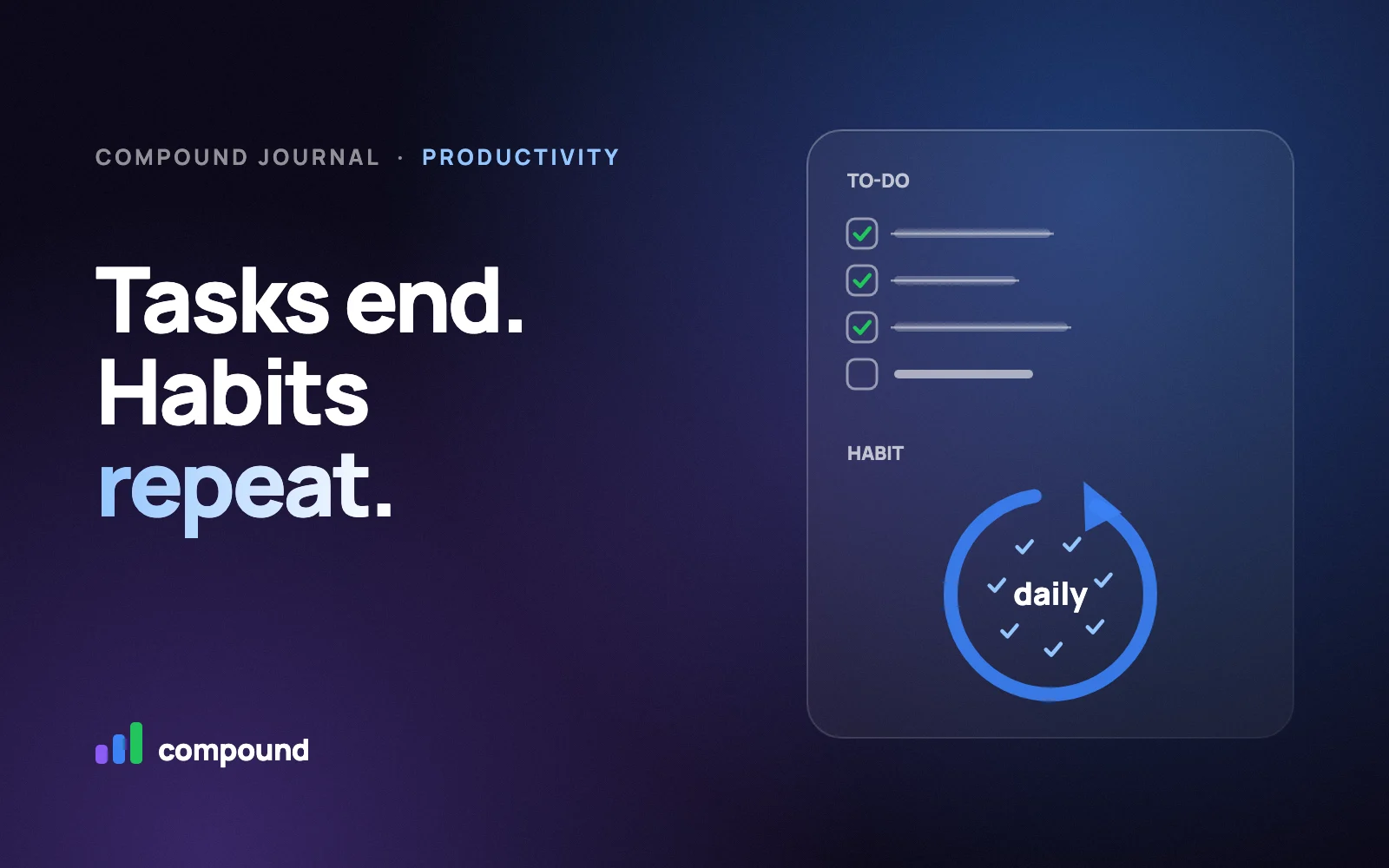
Most people use one tool for everything: a to-do list that holds “call the bank”, “buy milk” and “go to the gym”. It works until it doesn’t. The list grows, the recurring items pile up, and the things that matter most get buried under errands. The fix is to split two kinds of work that behave very differently.
Tasks end. Habits repeat.
A task has a finish line. Once you send the invoice, it’s done and it should disappear from your view. A habit never finishes. Going to the gym today doesn’t remove it from tomorrow. Mixing the two causes three problems:
- Recurring items clutter the list. Your daily habits sit next to one-off tasks and make the list look endless.
- Checking off a habit feels empty. It comes back tomorrow, so the satisfaction of “done” never lasts.
- You lose the long view. A to-do list shows today. It can’t show that you’ve exercised 18 days out of 30.
What a to-do list is good at
Capturing and clearing. A good task system takes everything out of your head, lets you plan the day and gives you the satisfaction of a shrinking list. Weekly planning works well here: put the important tasks on specific days, and look at what’s left on Friday.
What a habit tracker is good at
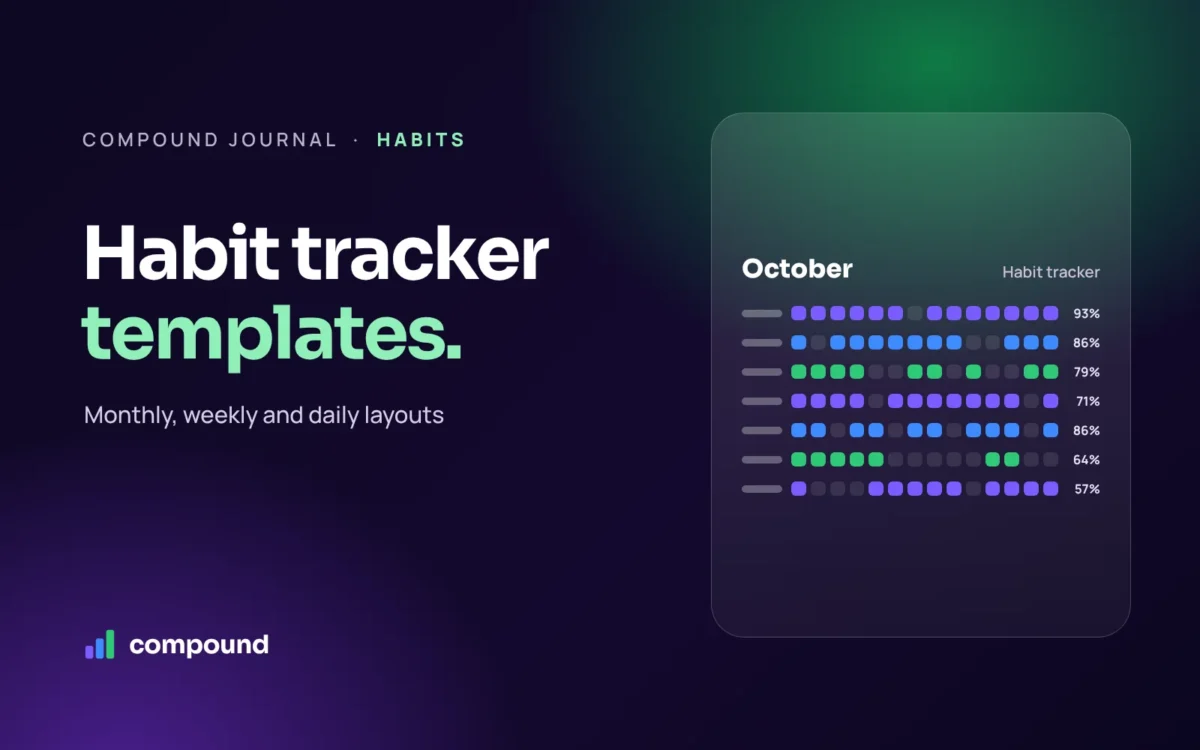
Showing patterns over time. A habit tracker answers questions a list can’t: How consistent am I? Which days do I slip? Is this habit getting easier? A monthly grid turns repetition into something visible, and completion rates tell you whether a habit is really forming.
Your to-do list manages your day. Your habit tracker manages who you’re becoming.
How to split your system
Use a simple rule: if it repeats on a schedule and is part of a personal goal, it’s a habit. If it happens once or has a deadline, it’s a task.
- “Read 20 pages” → habit.
- “Finish the book club book by Friday” → task.
- “Plan tomorrow” → habit.
- “Book dentist appointment” → task.
Some items are both. “Ship the newsletter every Tuesday” is a habit (“write 30 minutes a day”) that produces a task (“publish issue 12”).
Bring them back together in one review
Splitting the tools doesn’t mean splitting your attention. Review both in the same weekly session: tasks completed versus planned, and habit completion in percent. If tasks are always overflowing, your habits may be crowding your mornings. If habits are slipping, you may be packing too many tasks into the day.
Why Compound includes both
Compound has a habit grid and a weekly task board in the same app, on the same screen. Tasks have daily rings and a weekly chart; habits have monthly completion and streaks. The two stay separate where they should and come together in the daily report, so one view tells you how your day actually went.