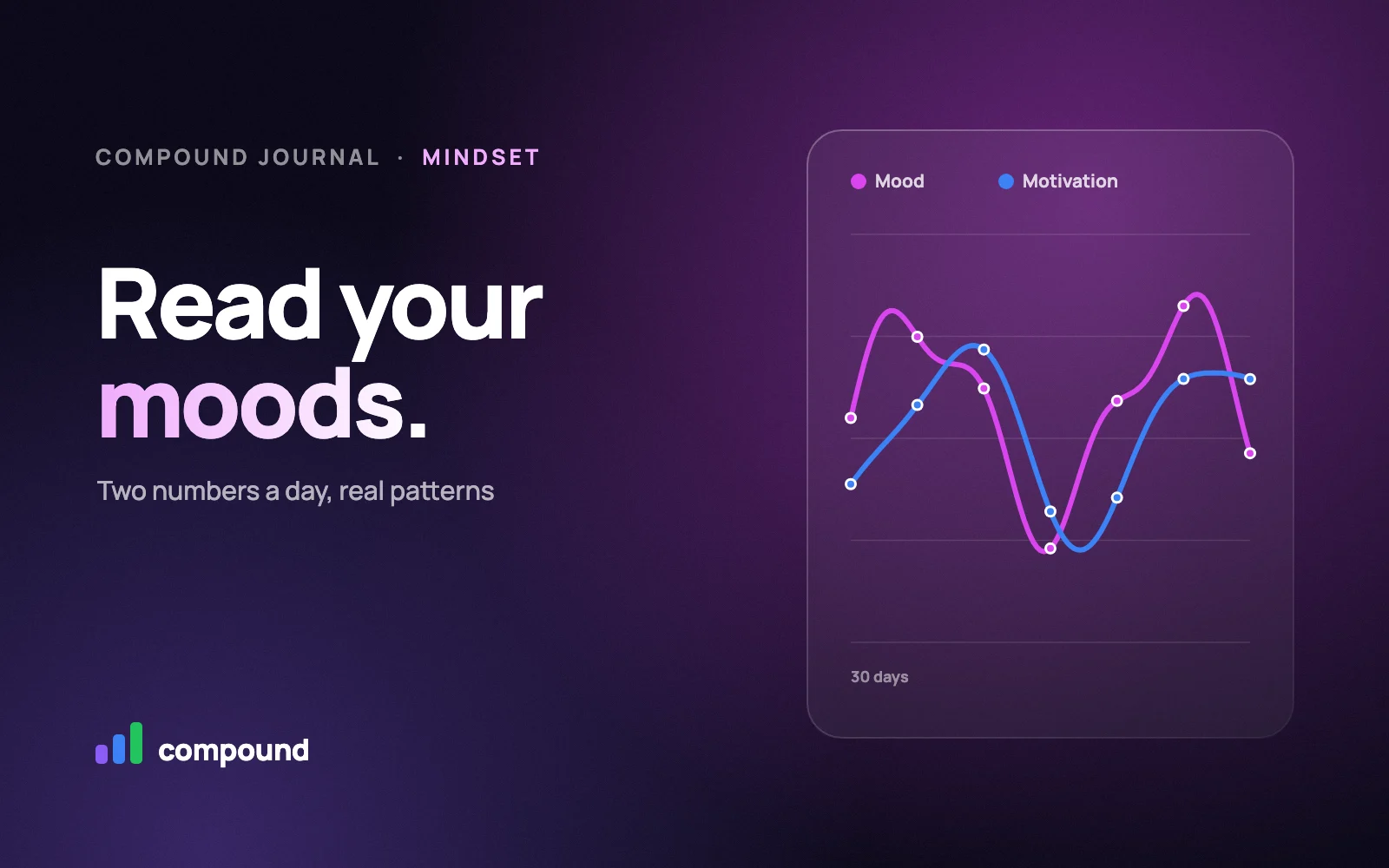
A habit grid tells you what you did. It doesn’t tell you how you felt while doing it, or why some weeks flowed and others dragged. Logging two numbers a day, mood and motivation from 1 to 10, fills that gap. It takes ten seconds, and after a month it shows patterns your habits alone never will.
Why two numbers are enough
Mood journals often fail because they ask too much. A paragraph a day is a habit in itself, and it’s the first one to go when life gets busy. Two numbers are fast enough to log every day, and simple enough to compare across weeks.
- Mood is how you feel: calm, low, irritable, good.
- Motivation is how much drive you have to act on what matters.
They often move together, but not always. A good mood with low motivation might be a rest day you needed. Low mood with high motivation can be a stressful week where you still pushed through. The gap between the two is information.
What patterns usually appear
After a few weeks, most people notice at least one of these:
- Sleep shows up first. Mood drops a day or two after short nights, before habits start slipping.
- Certain habits lift the score. Days with exercise, time outside or reading often carry a higher mood.
- Weekly rhythm. Many people have a consistent low day, often Monday or Sunday evening.
- Motivation leads, habits follow. A drop in motivation scores often predicts a weak habit week.
Your mood scores are often an early warning system. They dip before the habits do.
How to log honestly
Log at the same time each day, ideally in the evening when the day is done. Don’t overthink it: the first number that comes to mind is usually right. Avoid the middle as a default; a 5 every day tells you nothing. And remember there are no good or bad scores. A 3 logged honestly is more useful than a 7 logged out of guilt.
Reading your weekly averages
Single days are noisy. Weekly averages are where the signal is. Once a week, compare your average mood and motivation with your habit completion for the same week. Ask:
- Did my best habit week match my best mood week?
- What happened in the week with the lowest score?
- Is there a habit that seems to protect my mood?
Over a few months, this turns into practical self-knowledge. You might learn that cutting a habit during a stressful week is fine as long as you keep the one that keeps you steady.
A note on limits
Tracking mood is a tool for noticing patterns, not a diagnosis. If your scores stay low for weeks, or you feel worse rather than better, talk to someone you trust or a health professional. Numbers can show you that something is off; people help you understand why.
Mood tracking in Compound
Compound’s Mental State section puts mood and motivation on the same monthly grid as your habits, with a 1-to-10 score per day, a curve for the month and a weekly mindset analysis. You see how your head and your habits move together, on one screen.